

How Industrial Drone Programs Are Using Generative AI
/Industrial drone programs are undergoing one of their biggest transformations since the introduction of autonomous flight. After years of relying on rule-based automation and traditional machine learning (ML) models, operators in oil & gas, energy, utilities, and heavy industry are now using generative AI to unlock faster analysis, smarter operations, and more predictive insights.
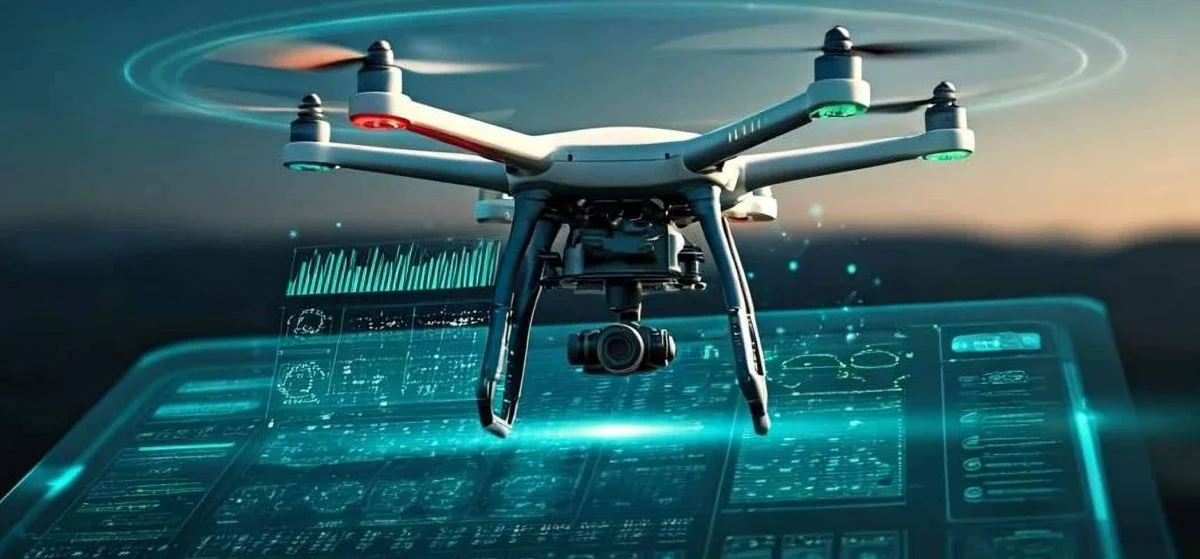
Autonomy pushed drones into routine inspection roles, and now generative AI is pushing them into decision-support roles where they’re becoming digital coworkers that help operators understand what’s happening across their assets in real time.
Keep reading to learn how generative AI is reshaping drone operations today, what’s emerging next, and why this shift matters for industrial environments.
From “Automated Flight” to “AI-Driven Operations”
For years, industrial drone programs have focused on one core outcome: getting high-quality visual and thermal data safely and reliably. But for many programs, the real bottleneck wasn’t the flying—it was everything after the flight:
Reviewing thousands of image and video files
Comparing today’s anomaly to last month’s
Writing inspection summaries
Flagging issues for the maintenance team
Scheduling repeat missions
Generative AI is now automating—and in some cases, improving—those post-inspection tasks. Instead of manually stitching together insights, industrial teams can ask systems direct questions:
“What’s changed on this flare stack since last inspection?”
“Is this anomaly new or recurring?”
“Draft a report for this inspection with recommended actions.”
Generative AI can answer because it’s trained on the site’s own drone data, inspection history, sensor readings, and past reports. This is the leap from data collection to data understanding.
Mission Planning That Thinks Ahead
Generative AI is making flight planning far more adaptive than the static routes of early autonomous systems. Drone platforms can now:
Recommend flight paths based on past issues
Increase inspection frequency in high-risk areas
Prioritize missions based on asset-health trends
Auto-schedule flights when weather clears
Nitin Gupta of FlytBase discussed, at last month’s Energy Drone & Robotics Forum in Houston, (summarized by DRONELIFE) that generative AI “is completely transforming the way we look at our data or understand data, and generate insights from that data.”
Operators no longer have to map out every flight—they simply specify what outcome they want and the system orchestrates the rest. Gupta said, “Now [operations teams] are able to just say, ‘What is the job that I want to get done?’ And internally, everything is managed and scheduled by the system, and you get the results and outcomes that you want.”
Reports in Minutes, Not Days
Generative AI now excels at turning raw data into usable language—something earlier ML models struggled with. Industrial operators are now using it to automatically generate:
Condition summaries
Issue classifications and severity levels
Annotated images
Work-order-ready recommendations
Compliance documentation
These analyses can be done by generative AI in minutes, with high confidence of accuracy, rather than in the course of days or weeks after the data is collected. That speed is game-changing especially in cases of storm response, equipment failures, and remote facilities.
Predictive Insights: The Real Breakthrough
Generative AI models can analyze patterns across historical imagery, flight logs, environmental conditions, and maintenance records. That means they can identify:
Early corrosion
Micro-cracks in steel
Thermal drift in electrical components
Vegetation encroachment
Structural distortions
These insights shift programs from reactive to predictive operations. Autonomous systems that integrate AI are becoming more and more predictive, allowing them to understand what needs attention before a failure occurs.
Examples of Industrial Companies Using Generative AI
The rise of generative AI in drone programs mirrors a broader shift across industrial operations. Here are a few notable examples of generative AI being used to enhance inspection, maintenance, and operational workflows.
AI Workforce for Drone-Based Infrastructure Inspection
AWS’s AI Workforce program combines drones with AI to inspect wind turbines, power lines, pipelines, and other industrial infrastructure. Users interact with a simple AI assistant and dashboard that displays near real-time drone inspections, detected issues, and AI-generated insights. The goal is safer, faster, more accurate inspections at scale.
Generative AI for Industrial Device Maintenance
ABB’s My Measurement Assistant+ combines generative AI, AR, and cloud computing to help technicians troubleshoot industrial measurement devices more quickly and accurately. It aggregates IT/OT data and can reduce first-time fix rates by up to 50%.
The same patterns—diagnostics, guided troubleshooting, asset awareness—are exactly what drone-based AI systems now deliver during inspections.
Industrial Copilot for AI-Driven Maintenance
Siemens’ Industrial Copilot uses generative AI to support technicians across the maintenance lifecycle: planning, diagnostics, predictive maintenance, and code generation. It represents the direction drone software is heading—an AI assistant that understands assets, interprets sensor data, and recommends maintenance actions in natural language.
Generative AI for Quality and Visual Inspection
Bosch uses generative AI to create synthetic images for optical inspection and to accelerate AI deployment in its manufacturing plants from several months to just weeks. Nearly half of Bosch’s plants now use AI in their manufacturing.
Drone inspections often face limited data for rare failures, and Bosch’s synthetic-data approach can serve as a roadmap for drone vendors that need to train models on rare defects.
What’s Next: Multimodal and Real-Time AI
Over the next few years, generative AI in drone programs will evolve toward:
Multimodal analysis that merges text, thermal data, imagery, LIDAR, and audio
Natural-language operational interfaces (e.g., “Show me all anomalies from last week”)
Real-time defect detection during flight
Autonomous inspection loops that detect issues, dispatch drones, analyze results, and recommend actions
Human judgment will always be part of the loop, but AI can accelerate, enhance, and scale every stage of the workflow.
Conclusion
Generative AI is becoming an intelligence layer that makes large-scale industrial drone operations possible (and more efficient). As leading industrial companies adopt generative AI across their operations, drone programs are evolving in the same direction: toward faster insights, more predictive maintenance, and highly autonomous inspection cycles.
Drones have made inspections easier.
Generative AI is making them smarter.
